

Why Small Businesses Need Affordable Marketing: Practical Digital Tips to Grow on a Budget
In today’s digital-first world, small businesses need marketing that drives growth without blowing the budget. Affordable strategies increase your visibility and spark customer engagement while keeping costs under control. This article lays out practical, low-cost digital tactics tailored for small enterprises — local search optimisation, purposeful content, social media that connects, and email marketing that converts. Use this roadmap to compete smarter with larger competitors and get more value from every marketing dollar.
Key Takeaways
- Affordable marketing strategies help small businesses grow by using cost-effective digital tools and platforms.
- Local SEO improves visibility by optimising Google My Business, targeting local keywords, and encouraging customer reviews.
- Email marketing builds customer loyalty and drives sales through list building, engaging content, and performance tracking.
- Content marketing enhances online presence by creating relevant blogs, videos, and infographics that support SEO.
- Social media marketing increases brand awareness by focusing on key platforms and using targeted, budget-friendly ads.
- Digital marketing enables small businesses to compete effectively by aligning strategies with measurable customer behaviours.
- Sydney businesses benefit from local SEO by engaging with community events, directories, and actively managing reviews.
- Prioritising email, content, and local SEO marketing tactics delivers the best return on investment for small businesses.
- Measuring marketing ROI through specific metrics and analytics ensures efficient budget allocation and campaign optimisation.
What Are Affordable Marketing Strategies for Small Businesses?
Affordable marketing strategies are cost-conscious approaches that help you reach the right customers efficiently. They rely on digital tools and platforms that deliver measurable results, so you can focus your efforts where they matter most. Rather than one-size-fits-all campaigns, these tactics are tailored to your business, industry and local market.
A strong part of this approach is prioritising digital channels that can be tracked and tuned. Local search optimisation, email, content and social media marketing together let you expand reach and manage spend more effectively.
Effective Techniques for Local SEO

Local SEO helps your business show up for searches by nearby customers. Small tweaks can make a big difference in local search results. Key techniques include:
- Optimising Google My Business: Claim and complete your Google My Business listing — it’s free and essential for appearing in local search and on Google Maps, which drives enquiries and foot traffic.
- Local Keyword Targeting: Use location-based keywords naturally across your site and listings. Think like a local customer — phrases such as “best coffee shop in Sydney” help you match real searches.
- Generating Positive Online Reviews: Encourage happy customers to leave reviews and respond to them. Reviews build credibility and influence local search rankings.
Focusing on local search is a practical way to boost visibility and bring more customers through your door.
Email Marketing
Email remains one of the most cost-effective channels for small businesses. Done well, it builds loyalty and drives sales. The essentials of a strong email program are:
- Building an Email List: Capture addresses at checkout, on your website and in-store with clear sign-up prompts. A clean list is your best marketing asset.
- Crafting Engaging Content: Send useful, personalised messages — offers, event invites or helpful tips — that give subscribers a reason to open and act.
- Measuring Success: Track open rates, click-throughs and conversions so you can test what works and improve over time.
With the right approach, email marketing can deliver impressive returns for a small outlay.
Content Marketing
Content marketing builds your presence and credibility online. Create useful, relevant content that answers customers’ questions and showcases what you do best. Important elements include:
- Types of Content Creation: Use blogs, videos, infographics and case studies to educate customers and demonstrate value.
- Effective Sharing Strategies: Distribute content via social channels and email to increase reach and keep your audience engaged.
- Content and SEO Relationship: Quality content that incorporates relevant keywords helps your SEO and drives organic traffic.
Consistent, helpful content positions your business as a trusted option and supports long-term growth.
Social Media Marketing
Social media can be a powerful, low-cost channel when you focus on the right platforms and content. It helps you build relationships and drive traffic. Key tactics include:
- Selecting the Right Platforms: Choose platforms where your customers spend time — Facebook, Instagram or LinkedIn — and prioritise those rather than trying to be everywhere.
- Creating Engaging Content: Share behind-the-scenes posts, customer stories and simple interactive posts to increase engagement and loyalty.
- Cost-Effective Advertising: Use targeted, small-budget ads to reach specific audiences. Set daily caps and test creatives to get the best results.
Well-chosen social strategies help you raise brand awareness and drive visitors to your site or store.
Why Is Digital Marketing Crucial for Small Business Success?
Digital marketing lets small businesses compete and be found where customers are searching. A clear online presence builds brand recognition, trust and repeat business. Because digital channels are measurable, you can see what’s working and shift resources to the tactics that deliver results.
Customers now research online before buying, so being visible and relevant at every stage of the buying journey is critical. Data-driven decisions help align your marketing with real customer behaviour.
How Can Small Businesses Leverage Local SEO in Sydney?
For Sydney-based businesses, local SEO is a direct path to nearby customers. Focus on local signals and community visibility to improve rankings. Practical steps include:
- Utilising Local Directories: List your business in local directories like Yelp and relevant industry sites to increase discoverability.
- Engaging with Local Community: Partner with local groups, sponsor events or collaborate with nearby businesses to boost your profile and earn local links.
- Encouraging Customer Reviews: Actively request and respond to reviews on Google and Facebook — this builds trust and supports SEO.
Targeted local SEO work helps you reach customers who are ready to buy in your area.
Which Cost Effective Marketing Tactics Deliver the Best ROI?
Certain low-cost tactics consistently deliver strong returns for small businesses. Knowing which to prioritise helps you spend smarter. Standout tactics include:
- Email Marketing: With an average ROI often cited around $42 for every dollar spent, email is one of the most efficient channels.
- Content Marketing: Businesses that commit to useful content typically see better conversion and long-term traffic than those that don’t.
- Local SEO: Optimising for local search drives foot traffic and enquiries — often with a very low ongoing cost.
Focusing on these areas can stretch your marketing budget further and deliver measurable growth.
What Role Does Content Marketing Play in Driving Online Presence?
Content marketing attracts potential customers and helps you build authority in your niche. Useful, targeted content supports every stage of the customer journey. Core roles include:
- Building Brand Authority: Regular, helpful content positions you as a reliable expert and builds trust.
- Engaging Target Customers: Tailored content answers customer questions and nudges them toward a purchase.
- Utilising Analytics: Track which pieces perform best and double down on formats and topics that drive results.
Good content not only improves visibility but also creates a foundation for repeat traffic and stronger customer relationships.
How to Measure Marketing ROI for Small Business Strategies?
Measuring ROI lets you see what’s paying off and where to reallocate time and budget. Clear measurement keeps your marketing efficient. Key techniques are:
- Setting Specific Metrics: Define measurable goals — leads,
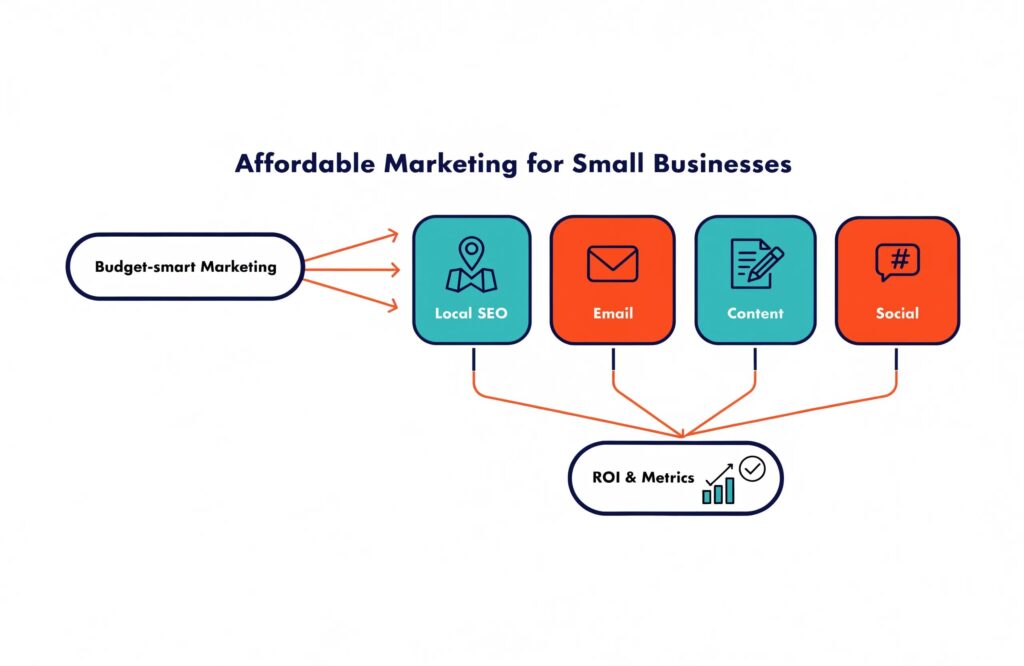
sales, foot traffic or revenue per campaign — so success is clear.
- Utilising Tracking Tools: Use Google Analytics and simple CRM or email metrics to track traffic, conversions and campaign performance.
- Evaluating Overall Performance: Regularly review results to spot trends, cut underperforming activities and scale what works.
By tracking the right metrics and reviewing them regularly, you can optimise your marketing for maximum impact.
Frequently Asked Questions
1. What is the importance of a robust online presence for small businesses?
A strong online presence is crucial for small businesses as it enhances visibility and brand recognition. Customers increasingly conduct online research before making purchases, and businesses that appear in search results or have engaging content are more likely to win customer trust. This visibility not only attracts new customers but also cultivates loyalty among existing ones, leading to repeat business and referrals.
2. How can small businesses effectively use social media for marketing?
Small businesses should focus on choosing the right social media platforms where their target audience is most active, such as Facebook or Instagram. By creating engaging content including posts, stories, and interactive elements, they can foster community engagement and customer loyalty. Additionally, utilizing targeted ads can help reach specific demographics efficiently without overspending, making social media a valuable marketing asset.
3. What are some low-cost content creation strategies?
Small businesses can create impactful content by leveraging their existing resources. Blogs, infographics, and videos can be produced cost-effectively in-house. Encouraging customer stories or reviews can also provide genuine content. Sharing educational or entertaining posts increases customer engagement and establishes the business as a trusted authority in its field. Repurposing content across different formats maximizes reach without significant additional costs.
4. Why is email list segmentation important for marketing success?
Email list segmentation allows businesses to tailor their messages based on customer demographics, interests, and behaviors. By sending targeted content to specific segments of their audience, businesses can improve engagement rates and conversion. This personalized approach enhances the customer experience, increases relevance, and stimulates higher open and click-through rates, leading to more effective email marketing campaigns in terms of ROI.
5. What types of metrics should small businesses track for their marketing efforts?
Small businesses should track metrics that align with their marketing goals, such as website traffic, social media engagement, email open and click rates, and conversion rates. Monitoring these KPIs helps businesses understand what strategies are working, allowing them to adapt their approach accordingly. Tools like Google Analytics or CRM software can provide valuable insights for continuous improvement and effective budget allocation.
6. How can small businesses use local directories to enhance their SEO efforts?
Listing on local directories like Yelp, Yellow Pages, and industry-specific sites boosts visibility and credibility for small businesses. These directories improve search rankings and help potential customers find the business easily. Consistent information across all directories also supports local SEO efforts, making it imperative to ensure that business names, addresses, and phone numbers are accurate and up to date.
7. What role does community engagement play in local SEO effectiveness?
Community engagement significantly enhances local SEO as it fosters relationships and builds local reputation. Small businesses that sponsor local events, participate in community projects, or collaborate with nearby establishments can earn backlinks and positive publicity. These activities encourage word-of-mouth referrals and generate genuine reviews, which are crucial for improving local search rankings and attracting more customers from the surrounding area.
Conclusion
Implementing affordable digital marketing strategies is essential for small businesses aiming to grow within their budget constraints. By leveraging local SEO, engaging content, and effective email marketing, you can significantly enhance your brand’s visibility and customer interactions. Take the next step towards optimising your marketing efforts by exploring additional resources available on our website. Stay competitive and thrive by adopting these practical strategies today.